


Ensuring Safety in Competitive High School Tournaments: A Comprehensive Guide
by Jeremy Gallman, Founder / Tournament Director
and Rex Moncrief of The OutdoorNews
HSBT Safety Standard: Mandatory Boater Education for ALL Captains
The High School Bass Trail (HSBT) and High School Bass Classic (HSBC) were built to lead, not follow.
From day one, we’ve operated with a simple philosophy:
If you’re going to put high school anglers on the water, safety comes first—every time.
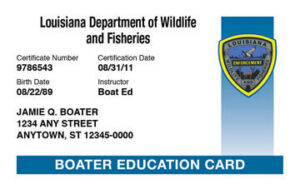 As leaders in high school bass fishing tournaments, HSBT is raising the bar by requiring ALL boat captains to complete a state-approved Boater Safety Education Course and hold a valid certificate.
- This is not about checking a box.
- This is about setting the standard.
- There are no exceptions.
How Captains Can Meet the HSBT Safety Standard
Boat captains may satisfy this requirement through any of the following approved options:
- Boat-Ed.com – A delegated provider for the Louisiana Department of Wildlife and Fisheries (LDWF).
- Free Louisiana State Online Course at https://boatus.org/louisiana
- LDWF In-Person Boater Education Course (Free) at https://www.wlf.louisiana.gov/page/boater-education
- Led by LDWF law enforcement agents and trained volunteer instructors
- Course length: 6–8 hours (typically completed in one day)
- Instruction includes:
- Vessel selection and classification
- Hulls, motors, and legal requirements
- Required safety equipment
- Navigation rules and charts
- Trailering, personal watercraft, canoes, sailboats, and more
- Minimum passing score: 70%
- Full attendance required — disruptive behavior or leaving early may result in failure
- LDWF offers these courses year-round.
This approach aligns with—and in many cases exceeds—national tournament safety expectations, including recent announcements from B.A.S.S. requiring boater safety courses for tournament participation.
HSBT Captain Safety Commitment (Required Agreement)
By serving as a boat captain in any HSBT or HSBC event, captains affirm that:
- They are legally authorized to operate a motorized vessel in Louisiana
- ALL HSBT captains—regardless of age, experience level, or Louisiana statutory birthdate exemptions—MUST hold a valid, state-approved Boater Safety certificate
- HSBT / HSBC requires proof of completion from every captain, without exception
- Proof of certification must be uploaded through the HSBT website prior to the first tournament and may be requested again at any time
- Enforcement: Professional Standards Require Real Accountability
- Failure to provide valid Boater Safety certification will result in immediate disqualification or removal from the event until corrected
Important Clarification:
“I’m old enough under state law” does NOT meet HSBT standards.
HSBT events operate above minimum legal thresholds.
If you captain a boat in HSBT, Boater Safety certification is mandatory. Period.
That’s what leadership looks like.
That’s what protecting student-anglers demands.
Bass fishing tournament competitions bring with them not just the thrill of the sport but also a significant responsibility towards safety. The stringent rules and regulations in place are not just formalities; they are essential safeguards designed to protect the lives of those on the water. This article delves into the crucial safety measures mandated in such tournaments, underscoring their importance for every participant.
The Importance of Boat Pegs/Numbers
Each team in a high school bass tournament competition is issued a unique “boat peg” or number. This is not just a means of identification; it’s a critical part of the safety protocol. This peg or number must be retained until the weigh-in at the end of the tournament. It ensures that boats are accounted for and helps in managing the event more effectively, especially in terms of safety checks and compliance.
Mandatory Use of Personal Flotation Devices (PFDs)
One of the non-negotiable rules in competitive high school bass tournaments is the use of a U.S. Coast Guard-approved, state-approved chest-type personal flotation device (PFD). This rule is applicable to every contestant and boat captain, and the PFD must be fastened correctly anytime the combustion engine is operational, from the initial boat check until the weigh-in each day of the tournament. This requirement is a vital life-saving measure, as PFDs dramatically increase the chances of survival in the event of an accident.
Emergency Ignition-Shutoff Devices
All participating boats must be fitted with an emergency ignition-shutoff device (aka kill switch). This device is a crucial safety tool that must be securely attached to the driver’s body whenever the boat’s combustion engine is running. In case the driver is thrown from their position, the device will automatically cut off the engine, thereby preventing potential injuries or further accidents.
Seating Regulations During Operation
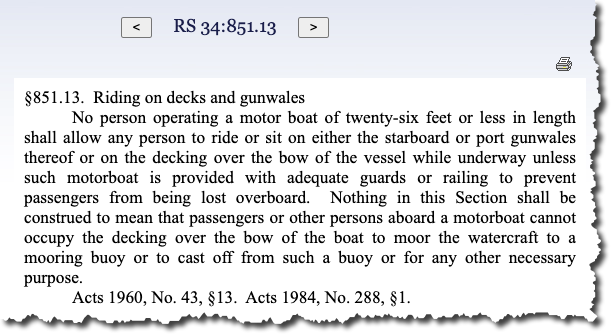 Safety extends to how individuals are seated in the boat. When the combustion engine is running, all persons aboard a tournament boat are required to remain seated in manufacturer-recommended, on-plane seating locations. This rule is in place to minimize the risk of falls or being thrown overboard due to sudden movements or changes in speed. Additionally, sitting on pedestal seats while the combustion engine is in operation is strictly prohibited, in accordance with LA RS 34:851.13. This law reflects a commitment to ensuring maximum safety on board.
Weather and Water Conditions
The tournament director (TD) holds the authority to alter the tournament schedule in response to unsafe weather or water conditions. This could include shortening, postponing, or even canceling tournament days. Such decisions, though possibly disappointing, are made with the utmost concern for the safety of all participants. Weather and water conditions can be unpredictable and can change rapidly, posing serious risks to those on the water.
Consequences of Safety Rule Violations
Non-compliance with these safety regulations is taken very seriously. Any violation can lead to disqualification (DQ) from the tournament. This strict enforcement underscores the priority placed on safety over competition. It serves as a constant reminder that while the spirit of competition is important, it should never compromise safety.
Conclusion
The safety rules in competitive boating are comprehensive and non-negotiable. They are designed not only to protect participants but also to foster a culture of safety-first in the sport. By adhering to these regulations, participants demonstrate their commitment to responsible boating and their respect for the lives of all those involved in the tournament. Ultimately, these safety measures ensure that the excitement and joy of competitive boating are never overshadowed by preventable tragedies.